UK Gambling Rules Relevant to Prive Casino Players
 Available in GB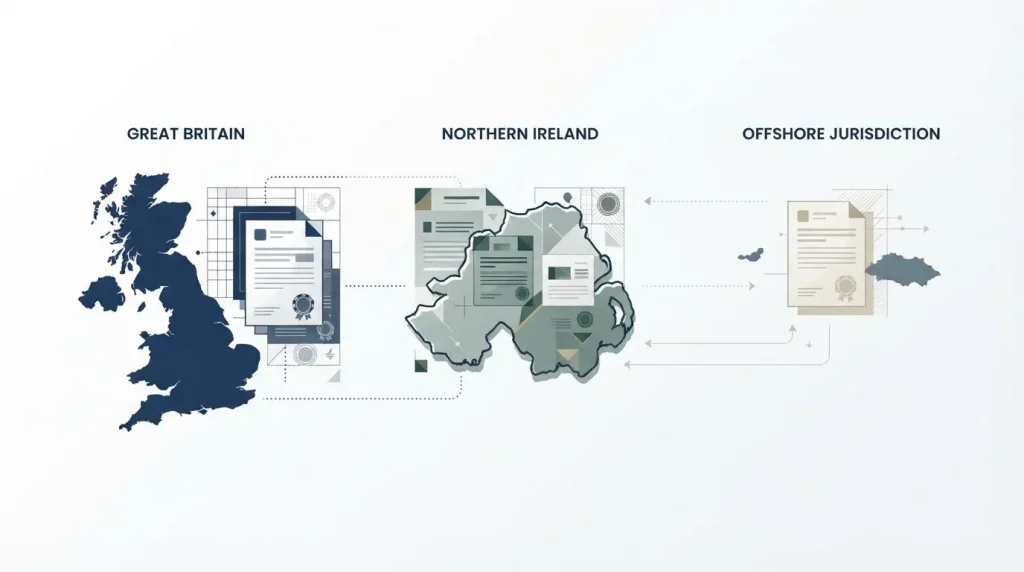
UK rules – checked 27 September 2026
For online casino regulation, “UK” is not one uniform licensing area. The UK Gambling Commission regulates commercial gambling in Great Britain – England, Scotland and Wales – and a remote casino serving consumers there needs the appropriate UKGC operating licence. Northern Ireland has a separate framework. In the current Prive Casino licence, no verified UKGC register hit was found for the checked Prive identifiers. That means the UKGC rules explained below are market rules for UKGC-licensed operators, not product features or protections that this guide attributes to Prive.
Table of Contents
- Great Britain: when a remote casino needs a UKGC licence
- Northern Ireland is not the same UKGC jurisdiction
- What UKGC licensing is designed to protect
- Online slot stake limits in the UKGC market
- Deposit-limit rules change on 30 September 2026
- Credit cards are prohibited for UKGC-regulated remote gambling
- Gambling advertising must protect under-18s
- Player winnings and gambling taxes are different questions
- A quick test for reading UK claims around an offshore casino
- Dates matter because regulation changes
- Which UK rules apply around Prive – and which do not
Great Britain: when a remote casino needs a UKGC licence
The Gambling Commission says a business needs its licence if it provides remote gambling facilities to consumers in Great Britain, regardless of where the business itself is based. For an online casino, that normally means a remote casino operating licence. This requirement sits within the Gambling Act 2005 framework as amended, and the Commission’s licensing functions cover England, Scotland and Wales.
The practical point is narrower than a general claim that every website visible from Britain is “UK regulated”. A UKGC licence is a specific regulatory status that should be verified in the Commission’s register. If a brand is licensed elsewhere, that offshore licence does not become a UKGC licence simply because British users can reach the site or because the site uses pounds. This distinction is central when interpreting Prive’s offshore licensing context.
Northern Ireland is not the same UKGC jurisdiction
The Gambling Commission states that its Gambling Act 2005 jurisdiction covers Great Britain, not Northern Ireland. Gambling in Northern Ireland, apart from the National Lottery arrangements, is governed under separate Northern Ireland legislation and involves different public bodies. That is why this guide uses “Great Britain” rather than “the UK” when describing UKGC operating-licence protections.
There is an important advertising nuance. The Commission says remote operators with key equipment in Great Britain that offer gambling in Northern Ireland, and businesses advertising remote gambling into Northern Ireland, can still face UKGC licensing requirements. But the Commission also says it does not regulate the gambling activity itself in Northern Ireland. A reader should therefore avoid assuming that a GB licensing rule automatically describes the whole United Kingdom in the same way.
What UKGC licensing is designed to protect
Under the Gambling Act framework, the Commission’s three licensing objectives are to keep gambling free from crime and disorder, ensure gambling is conducted fairly and openly, and protect children and other vulnerable people from harm or exploitation. These objectives shape the licence conditions, technical standards and compliance work that apply to Commission licensees.
For this Prive-focused guide, they are reference points rather than inferred brand promises. No UKGC register hit was verified for the checked Prive identifiers, so this page does not state that Prive is supervised under those objectives, participates in UKGC-mandated schemes, or provides every control described below. Those claims would require separate evidence tied to the brand itself.
Online slot stake limits in the UKGC market
UKGC-licensed remote casino slots are subject to statutory maximum stakes per game cycle. The £5 limit for adults aged 25 and over went live on 9 April 2025. The lower £2 limit for players aged 18 to 24 went live on 21 May 2025. The Commission’s guidance makes clear that these caps apply to online slots and not to other casino games such as roulette or blackjack.
| UKGC-licensed online slots | Maximum stake per game cycle | Effective date |
|---|---|---|
| Age 25+ | £5 | 9 April 2025 |
| Age 18-24 | £2 | 21 May 2025 |
This is a regulated-market requirement attached to remote casino operating licences. It should not be rewritten as “Prive has a £5 slot limit” unless that exact product behaviour is independently verified. The rule tells you what a UKGC-licensed casino must implement, not what an offshore casino necessarily implements.
Deposit-limit rules change on 30 September 2026
This page is being prepared three days before an important UKGC technical-standard change. From 30 September 2026, updated RTS 12B rules clarify how licensed operators must describe and implement customer financial limits. A limit can only be called a “deposit limit” if it meets the defined gross-deposit-limit concept, and once that limit is reached the gambling system must prevent further deposits until the period resets or the customer increases the limit after the standard cooling-off process.
The same update clarifies terminology for other optional financial controls, including stake limits, loss limits and net deposit limits. Where customers set multiple deposit-limit timeframes, the most restrictive applicable limit must take precedence. These are current UKGC requirements for licensed operators and therefore high-freshness regulatory facts. They are not evidence that Prive offers the same controls.
For practical account management at Prive, separate the market rule from the site’s own tools. Check what controls are actually available in the account interface and terms. The project’s payment rules and methods covers Prive-specific payment evidence without assuming that a UKGC standard applies to its cashier.
Credit cards are prohibited for UKGC-regulated remote gambling
Since 14 April 2020, UKGC licensees covered by the rule cannot accept credit-card payments for gambling. The restriction includes payments routed through money-service businesses such as e-wallets where the underlying funding source is a credit card. The Gambling Commission describes the rule as a consumer-protection measure for the regulated Great Britain market.
Again, that is a market rule rather than a statement about the current Prive cashier. This page does not infer Prive’s accepted payment instruments from UK law. A site’s payment screen needs its own evidence, and the absence or presence of a particular card option is not, by itself, proof of UKGC licensing.
Gambling advertising must protect under-18s
UK advertising rules prohibit gambling marketing from being directed at under-18s and from using content likely to have strong appeal to children or young people. The ASA and CAP updated their practical guidance in October 2025, and an enforcement notice issued in June 2026 reiterated the strong-appeal restriction for social-media gambling ads.
These rules are useful when assessing how gambling is marketed in the British market, but they should not be presented as a Prive compliance certificate. Whether a specific advertisement complies depends on the advertiser, media placement and creative execution. This guide therefore treats the rule as jurisdiction context only.
Player winnings and gambling taxes are different questions
For ordinary customers in the UK, gambling winnings are generally tax-free. A September 2026 Gambling Commission response states that customer gambling winnings are tax-free regardless of the amount won, while gambling taxes are levied on operators. GOV.UK guidance also excludes betting, lottery and pools winnings from Capital Gains Tax.
That does not mean gambling has no tax system. HMRC charges gambling duties to operators, including Remote Gaming Duty on qualifying remote gaming profits. Nor is this page personalised tax advice: unusual business, professional or cross-border circumstances can require a different analysis. The useful distinction for a normal player is simply that a prize is not the same thing as an operator’s gambling-duty liability.
A quick test for reading UK claims around an offshore casino
UKGC-market fact
- Remote casino operators serving Great Britain need the appropriate UKGC licence.
- Licensed online slots are capped at £5 per cycle for 25+ and £2 for 18-24.
- Credit-card gambling is prohibited for covered licensees.
- RTS 12B financial-limit wording changes on 30 September 2026.
Brand fact requiring separate proof
- Whether Prive holds a UKGC licence.
- Whether Prive implements those slot caps.
- Which deposit-limit tools Prive offers.
- Which payment methods Prive currently accepts.
This separation prevents a common review-site error: describing a jurisdiction’s consumer protections and then allowing readers to assume they apply to an operator that has not been verified in that jurisdiction’s register.
Dates matter because regulation changes
Several rules on this page have recent or imminent effective dates. The online-slot caps took effect in April and May 2025. The revised RTS 12B financial-limit requirements take effect on 30 September 2026. Current UKGC licensing pages were updated again in July 2026, and the Commission’s licensing policy was updated on 22 September 2026.
For that reason, this page should be treated as a dated regulatory explainer rather than permanent legal text. Before relying on a specific rule, check the regulator’s current page and effective date. That is particularly important around implementation deadlines, when a consultation outcome, technical standard and live requirement may contain similar wording but have different legal status.
Which UK rules apply around Prive – and which do not
The clearest approach is to separate Great Britain’s regulatory framework from Prive’s own licence status.
UKGC rules govern operators licensed for the Great Britain market, while Northern Ireland has a distinct gambling-law framework.
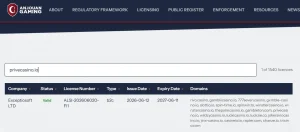
Current register checks did not verify a UKGC licence for the checked Prive identifiers, so UKGC-specific protections are not presented as Prive features.
Use the dedicated licence page for the brand-specific register evidence and the main Prive Casino UK review for product features such as games, payments and mobile access.
That separation keeps jurisdiction rules, operator licensing and casino features from being treated as the same question.
Recommend
Prive Casino Licence, Ownership and UK Trust Checks
full Prive Casino review Licence check - verified 27 September 2026Current records link the Prive...

Prive Casino Bonus and Welcome Offer
full Prive Casino review Bonus guide - checked 27 September 2026 Prive Casino advertises a...

Prive Casino Registration and KYC
main review Account guide - checked 27 September 2026Opening a Prive Casino account is an...

Prive Casino Games and Software Providers
Prive Casino review Games guide - checked 27 September 2026 Prive Casino has a broad...

Prive Casino Payment Methods for UK Players
full review Payments guide - checked 27 September 2026Prive Casino is consistently reported to support...

Prive Casino Mobile Experience
Prive Casino UK review Mobile guide - checked 27 September 2026Prive Casino is usable through...